
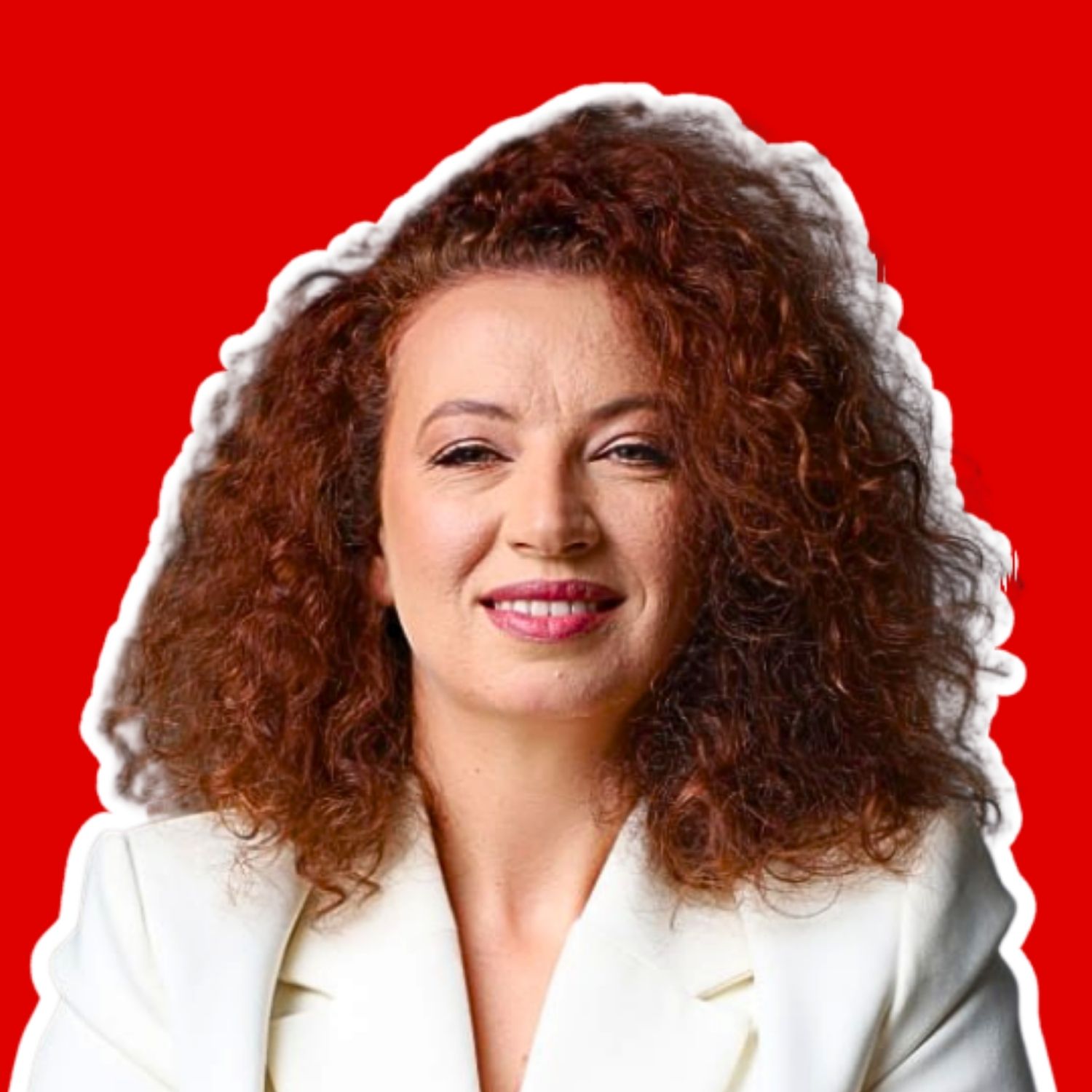
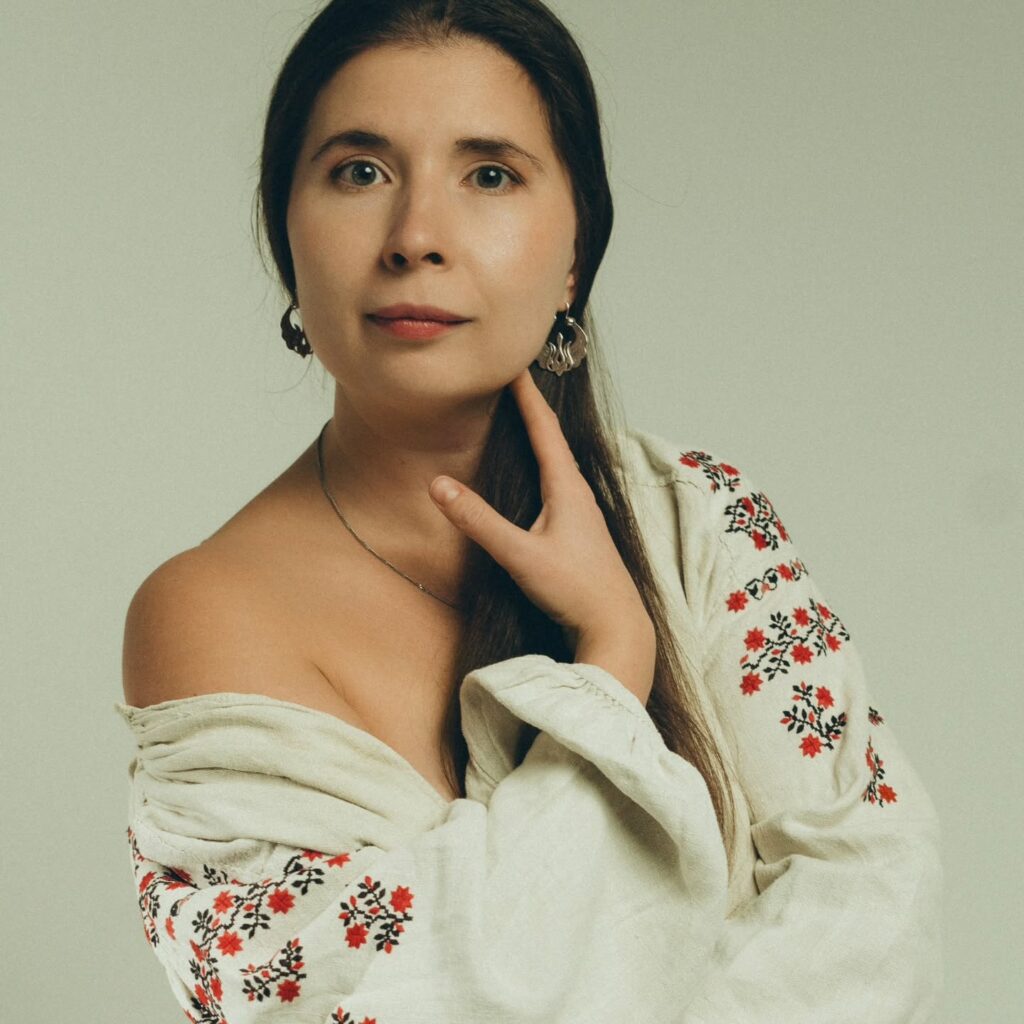
“What do you dislike about South Korea?” Most people will react to this question with surprise: are we supposed to dislike it? For Nadia Moroz-Olszańska, who for 14 years has been building Polish-Ukrainian dialogue in Kraków, this is the best proof that culture works. But only when it is invested in for years.


Interview by Nadija Hałuszka. The interview has been edited and shortened.
Please tell us a few words about yourself. Who are you and what do you do?
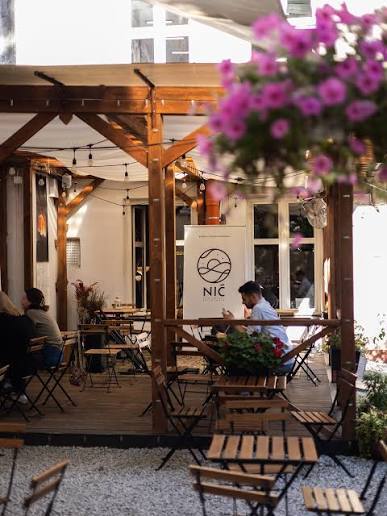
I came to Poland to study in 2012 from Poltava. I currently live in Kraków. I am the president of the Mass Events Foundation and the Cultural Diplomacy Foundation, a co-founder of the social enterprise—the NIĆ café-bookstore, and I also serve on the boards of the Active Integration Foundation and the Edu&Art Foundation. I completed cultural diplomacy studies at the Jagiellonian University, where I then taught for a year. In general, I consider myself an activist of the Ukrainian community. My main task is to make Ukraine and Poland, Ukrainians and Poles, build dialogue as much as possible—a conversation that would lead to finding common ground and allow us to be stronger together.
You have been living in Poland for over 10 years. How did Poles perceive Ukrainian culture in 2014, in 2022, and what is it like today?
We’re moving a bit in a spiral. The support was enormous, but behind support there always follows, unfortunately, Russian disinformation as well. What we are observing now is—let’s say—cyclical. Already in 2022 I said very loudly that we need to prepare for a situation in which Poland will not want to support Ukraine.
So did disinformation play the main role? Or rather fatigue?
There are many factors. For instance, the sheer numbers. Just imagine that two million people arrive, who walk the streets, speak a different language, have different traditions and cultural differences that nonetheless change the fabric of your life. That creates a certain discomfort. The problem does not lie only with Ukrainians, of whom there are many in Poland. The problem is that no systemic policy was created—neither on the Ukrainian authorities’ side nor the Polish side. People were saying at the end of 2022, in 2023, in 2024 that this is not a short-term story. We’ve reached 2026, and there are still no solutions. And that is the biggest problem.
The danger is that at some point the “other” may cease to be a Ukrainian and become anyone else. If society is so wound up, so polarized, and has been given permission that it’s acceptable to attack the “other,” then the moment when the “other” becomes not only a Ukrainian is, unfortunately, only a matter of time.
Did Poles become more interested in Ukrainian writers and artists?
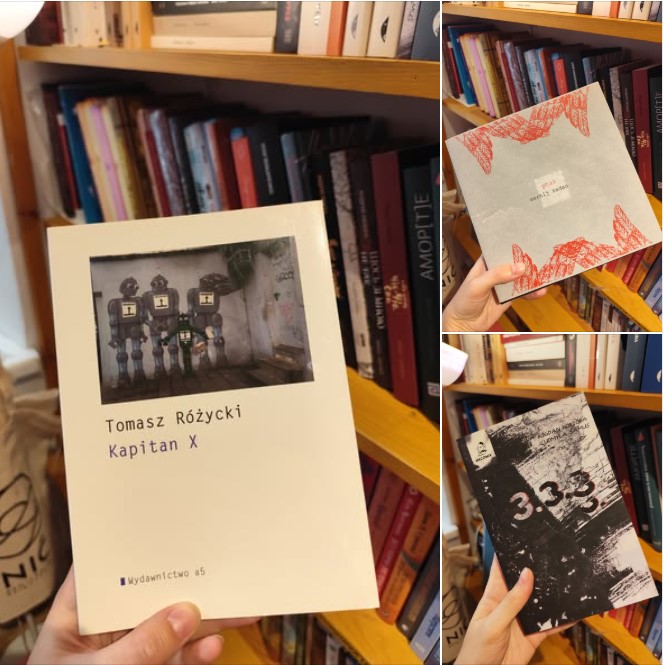
There is such interest, though it is local and needs to be worked on. You can see it, for instance, in Polish publishing. “I See You’re Interested in Darkness” is being published, “The Colony” has come out, and soon “Collapse” by Kidruk will be released. I’m no longer even mentioning our mastodons, such as Zhadan, who is published all the time and continues to interest the Polish reader. So is there interest? There is. But to strengthen it, strategies and policies are needed—ones that we, as the social sector, won’t build, but that we can rely on—both on the Polish and the Ukrainian side.
Which audience were you counting on when you set up the NIĆ café-bookstore in Kraków?
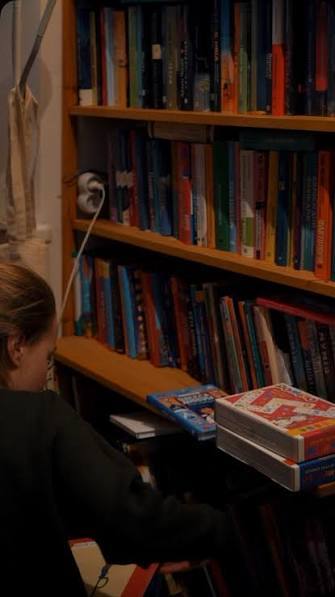
Above all, Ukrainians in Poland, because we have books in Ukrainian. Of course, we also wanted people to move from Russian-language books to Ukrainian ones—and 2022 was a strong impulse here. And among the bigger goals: to popularize Ukrainian literature also among Poles, to show that it is diverse, and even to organize presentations of books that have not yet been translated—so that they will be translated.
I remember that in 2022–2023 Poles would come to us and simply take 10–20 books off the shelf and go to the checkout. They said they were volunteers at a center where mothers with children were staying, and they wanted to bring them children’s books. So that a person who arrived would have at least some sense of security connected with the language, with identity.
And who comes to your events?
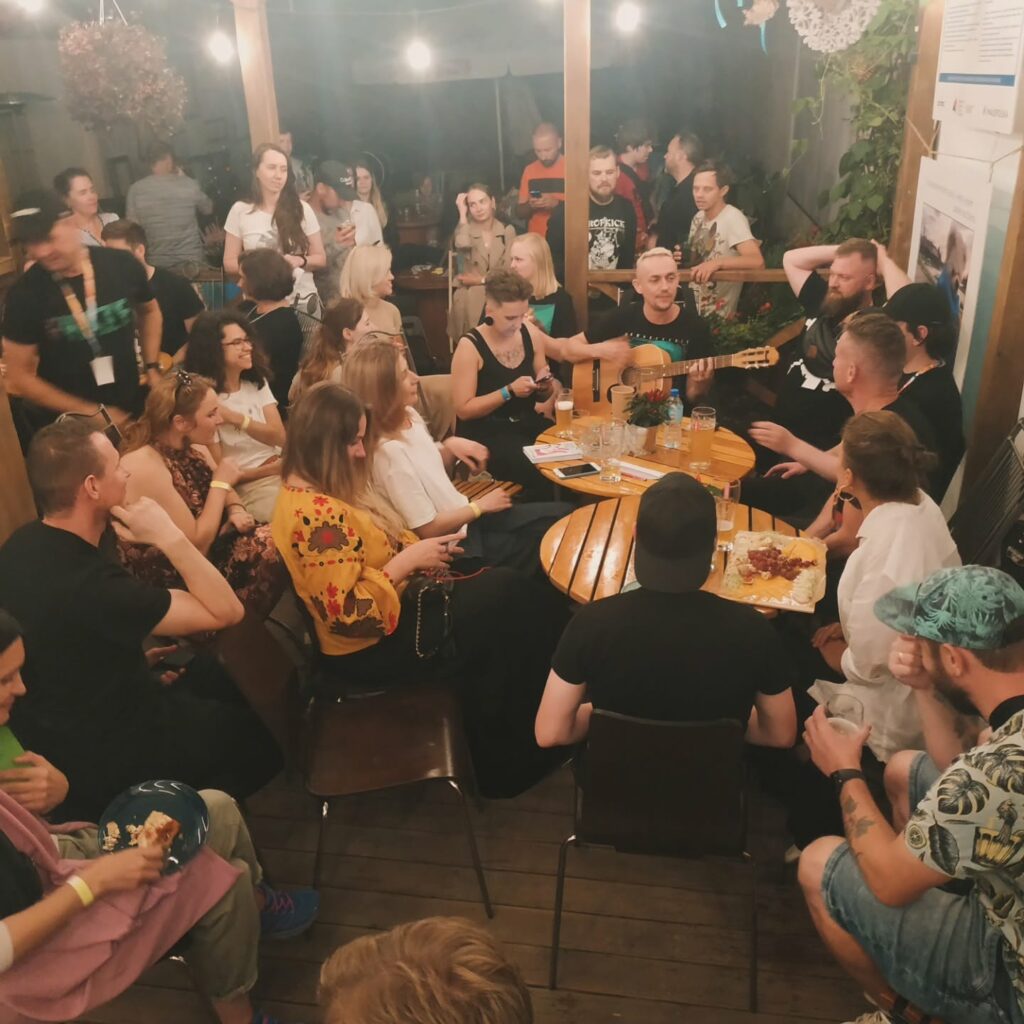
The Polish audience is interested. It all depends on the format. Literally yesterday there were ethnic dances, where language has no impact on the choice of event, and I think the ratio was 70 to 30 in favor of Poles and, in general, foreigners who came because that format interested them.
This year, at the International Festival of Ukrainian Theatre “East-West”, a theatre performed in which most of the actors are veterans. Does this change the festival’s atmosphere?
I don’t think so, because the repertoire the veterans’ theatre brought has nothing to do with the war at all. And rightly so—it was their therapy. They performed excerpts from world classics, starting with Shakespeare; they were comedies. The concept of the theatre presented at the festival was based on the idea that trauma can also be worked through via the art of theatre, but without having to retraumatize oneself in the process.
The festival itself changed fundamentally in 2022. A theatre from Mariupol came to us, from Kharkiv, from Sumy, a theatre from Luhansk. Theatre is a very delicate tissue that lives here and now. Theatre can’t stand lies, because you can feel that fiction right away.
It used to be very difficult to attract audiences to children’s performances. And now all children’s performances were filled to 90 or 100 percent, because schools simply brought their students to them. For them, it’s a unique opportunity to see a performance in Ukrainian.
In your work, do you feel the tension that has built up over the last year between Ukraine and Poland?
It doesn’t affect us directly, but I can’t say it isn’t there, because it is. Our task is to build a strong community around us, one that is ready to support you; to build understanding among local authorities and local opinion leaders—an understanding of how important we are as an organization—and to build trust among partners. You work that out over years.
But culture works much more slowly than arguments on current-affairs talk shows. Can it become a bridge?
I don’t agree that culture works more slowly. Culture works in the long term. If you asked Poles right now whether they remember the Order of the White Eagle affair, I’m sure 75 percent would ask: what was that? They’ve already forgotten about it. You have to understand the context, not just live in the moment.
Can we achieve this through culture? We can, but you have to invest in it as much as South Korea invests. If we ask today: what do you dislike about South Korea? Most people will answer: we dislike it? Are we supposed to dislike it? That’s exactly the point—strategy, long-term action.
And how many contemporary pop artists do you know from the Czech Republic? And from Slovakia? They also don’t have a strategy for conquering the world. Because the question is whether Ukraine even has to conquer the world at all. On the one hand, that would be great. On the other—in certain niches we’re excellent, we work, and we know how to play this game very well. For example with DakhaBrakha. Or with some DJ projects or with metal.
For us to become popular in Poland, we have to go through the path to popularity in the world and only then come to Poland. Rammstein didn’t first become popular in Poland and then in the world. First it conquered the world, and only then Poland.
What small steps can we take here, in Poland?
We must learn about the culture of the people we talk to. “Learn from others and do not renounce your own” – Shevchenko very aptly emphasized that in order to convey the uniqueness of one’s own culture, you have to understand the uniqueness of the culture you are speaking with. Build a dialogue, not a monologue.
That is, not to barge in right from the doorstep with the slogan: “here, read this.” Twardoch is now being translated into Ukrainian. Great—read him, talk about him with Poles; go to Polish films, watch them. After all, Agnieszka Holland made not only a film about the Great Famine in Ukraine; she has other films too. Read more demanding Polish literature—even Sienkiewicz—so as to understand where, in Poland, for example, the romanticizing of certain historical threads comes from.
Because it seems to me that when Ukrainians come with complaints—why don’t they accept us—well, why exactly should they accept us? We don’t know them completely. We need to do our homework. And then we can say: we’ve done our homework, now we’ll help you do yours. So yes—it’s about respect. About not shifting responsibility solely onto others, but taking it upon ourselves.
Thank you for the conversation.
Nadia Moroz-Olszańska—comes from Poltava; since 2012 she has been living in Kraków. A graduate in cultural diplomacy at the Jagiellonian University. President of the Mass Events Foundation, director of the International Ukrainian Theatre Festival “East–West,” co-founder of the Ukrainian café-bookstore NIĆ in Kraków.
Source: Nowiny Wschodnie

What do you think about this story?
Join the conversation. Please keep comments relevant to the article.
Write a comment