

Text by Graszka Graszkowska.
From the Editors: It’s a beautiful story about the history of the Recovered Territories and the borderlands—about loss, about longing for abandoned homes. In the villages of Warmia and Mazury and in towns like Górowo Iławeckie, the fates of Poles from the Eastern Borderlands and Ukrainians and Lemkos displaced in Operation Vistula merged. Although divided by language and religion, they were united by a shared injustice—all were brutally uprooted. This makes the current rise of chauvinism and nationalism all the more painful and incomprehensible. In a land born from the tragedy of refuge, hatred for a neighbor with a different surname sounds like a grim paradox. By forgetting this shared wound, we strip this place of its most valuable lesson: humility in the face of history’s changing verdicts. This text was found on Facebook, where the author runs her blog. We found it so valuable that we simply couldn’t scroll through it looking for more valuable content. We contacted you to obtain permission to publish.


What prompted the author’s reflection was the momentary removal of the Polish flag from Górowo’s town hall. A trivial, even technical, event. The flag disappeared due to wind damage. There was no spare flag in the right size; it had to wait a few days. Of course, Górowo Iławieckie is not a metropolis, where flag shops line every street. I don’t think this was incomprehensible to a resident of Górowo. He knew, yet he allowed himself to make a scandal out of it. And the scandal erupted, provoking the author to reflect on whose land this displaced Poles from the Eastern Borderlands, Ukrainians, and Lemkos had settled, belonged to. The indigenous people also remained, sharing the harsh reality of life in communist Poland with the displaced. But now, the most important thing – the author’s text.
Original title: “I’m not from Górowo, or the story of a certain photo.”
The following text is a voice in the discussion about memory and identity.
• Estimated reading time: 11 minutes
A house in an unknown land
I’m not from Górowo Iławeckie. For over ten years, I’ve lived in a village a few kilometers from the city, and when I think back to the moment Wojtek and I decided to move, I realize that the history of this place didn’t mean much to me back then. I didn’t wonder who had lived here before the war, I didn’t analyze maps or old borders. Only one thing mattered – our shared dream of a house in the countryside, away from the hustle and bustle of the city. We wanted a quieter life, closer to nature, and closer to each other. That was the only plan we had back then.
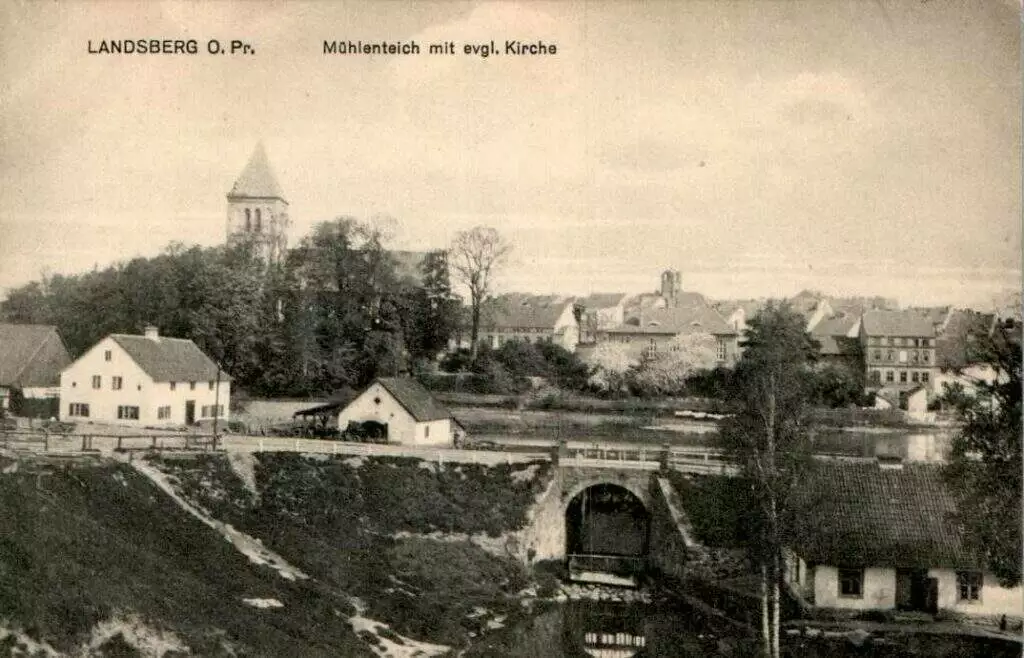
Without Wojtek, many things would probably never have caught my attention. He’s a history buff and has been deeply engaged in uncovering the history of this area for years. He showed me old photographs, told me stories about the old Landsberg, the inhabitants of East Prussia, and the people whose lives were shattered in an instant with the end of the war. I listened with interest, but only after several years did I begin to understand that we weren’t living in an ordinary place.
Before the war, this was the German town of Landsberg. When the war ended in 1945, for some, it was the end of a nightmare, for others the beginning of another tragedy. Residents fled the front, many died in the process, others were displaced, and the world they had known for generations simply ceased to exist. Later, new residents began arriving – from central Poland, from the former Eastern Borderlands, returning from forced labor, and, from 1947, also Ukrainian and Lemko families resettled as part of Operation Vistula. Each brought their own history, their own loss, and their own hope that this was the place they would eventually call home.
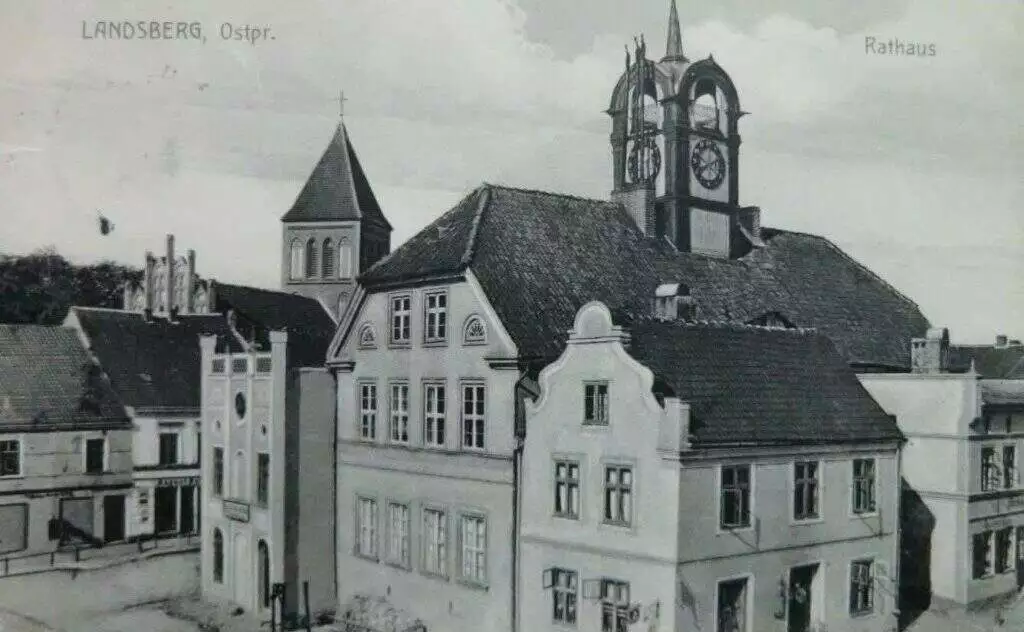
Town Hall in Górowo Iławiecki. Source: Wielki Wu.
Living Chronicles, Unwritten Maps
After completing the renovation of our house, there came a moment when I became more interested in the people than in the history written in books. The house was finished, the garden was slowly taking shape, and I felt that if I truly wanted to understand the place I had chosen for my life, I should first sit down with those who held its history in their own memories.
That’s how I ended up at the Barka We Are Together Association, where I met with women who had experienced Operation Vistula. I still remember those conversations. They weren’t history lectures, but stories about lives turned upside down overnight. About abandoned homes, orchards, churches, neighbors, and a journey into the unknown. I returned from these meetings with the feeling that history looks completely different when it ceases to be a record in a book and becomes someone’s memory.
Soon after, thanks to the mayor of our town, I also had the opportunity to meet with indigenous women. I wrote a blog post about it, and today I deeply regret not having started a YouTube channel. All I have left are the notes, and yet those women told stories that no one else will be able to recount from their own experience.
One of them particularly stuck with me. She told me that when there were no horses left after the war, women were harnessed to plows. She also spoke of how badly she was treated by some of the new settlers simply because she was German. I don’t remember all the details of the conversation, but I remember her face and the emotions with which she recalled those events. That was the first time I understood that war doesn’t end on the day the peace is signed. It lingers in people’s memories for a very long time.
A few years later, I had the opportunity to participate in another project. This time, I met with Polish-Ukrainian couples. We talked about everyday life, holidays, raising children, and how two traditions meet under one roof. These were incredibly calm conversations, devoid of grand words and political arguments. I left them convinced that people are much more likely to look for what unites them than what divides them.
Looking back now, I think it was then that I first formed my image of this place. Not through dates and textbooks, but through the people I was fortunate enough to meet. They taught me to view history not as a dispute over truth, but as a collection of human destinies, in which there was more suffering than victors. It seemed to me then that despite all this difficult history, they had managed to find something incredibly valuable – the ability to live side by side without constantly reopening old wounds.
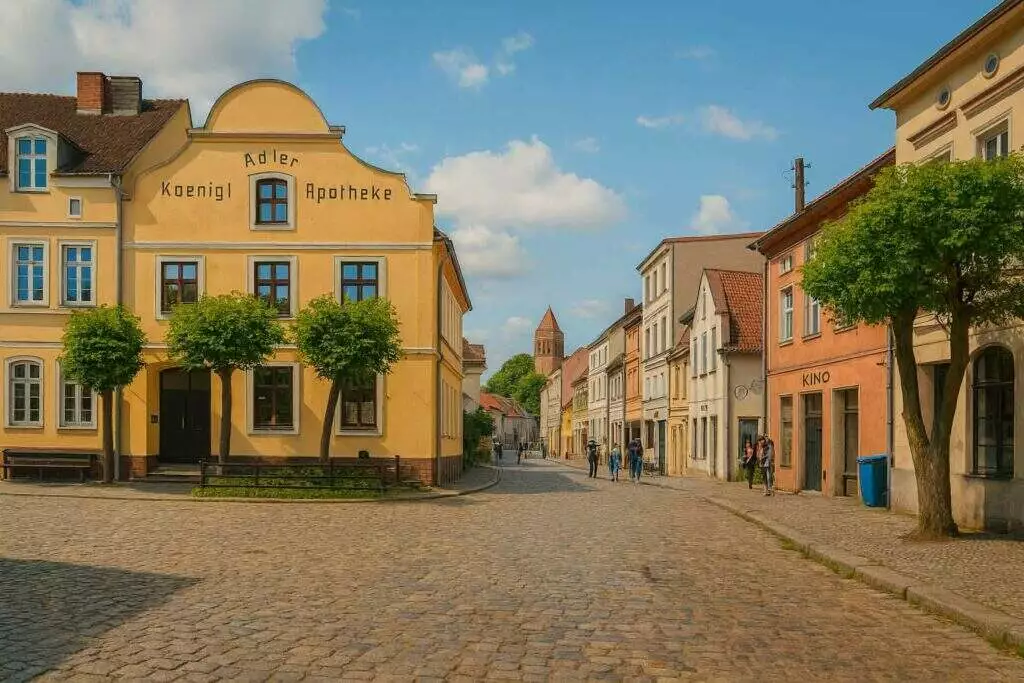
Górowo Iławieckie. Source: Wielki Wu
Bill for silence
Over time, I increasingly withdrew from city life. It wasn’t a decision made overnight. Rather, it was a process that matured within me for a long time. One day, I did a very honest examination of conscience and realized that Wojtek and I hadn’t come here for that. I hadn’t come to the countryside to become a community activist, get involved in new initiatives, or experience every local dispute. I came for peace. For a garden. For a life in harmony with the rhythm of the seasons. For a place where I could finally slow down. That’s when my own process of change began. Instead of trying to change the world around me, I began to care more about my own peace.
Two hundred strokes of hatred
A few days ago, while scrolling through social media, I came across a photo of Górowo’s town hall, and I had no idea it would be the one that would bring back memories of all the people I’ve met here over the past ten years. At first glance, there was nothing unusual about it. The town hall building, the flagpoles, and a question posed by one resident: “Is Górowo Iławeckie still Poland?” Only after a moment did I realize that the flagpole didn’t actually have a white-and-red flag. As one of the councilors later explained, it had been damaged by the wind and taken down to be replaced. I thought at the time that this was a common occurrence that could happen in any town.
I started reading the comments. First out of curiosity, then with growing disbelief. There were over two hundred of them, and with each passing day I had the impression that we were talking less and less about the flag, and more and more about who could be considered “ours” and who should be excluded from this place. I read, among other things, that Górowo Iławeckie is “Bandera city” that people with Ukrainian roots should not hold any positions, that “Poland is for Poles“, That “Ukrainians should go back home” and even announcements that someone “he will come to clean up“At some point, I stopped counting the posts. I was increasingly struck by something else. The ease with which people began to pass judgment on entire communities, judging others based on their surname, origin, or family history.
I sat in front of the monitor, and suddenly all the conversations from years past began to come flooding back to me. I remembered an elderly German woman I’d spoken to thanks to a meeting organized by the mayor. I’d seen her talking about the first post-war years, about hard work, about women being harnessed to plows when there were no horses, and about the humiliation she experienced simply because she was German. I remembered the women I’d met in Barka, who spoke of being forced to leave their homes during Operation Vistula, of journeys into the unknown, and of longing for places they could never return to. The Polish-Ukrainian couples with whom I’d spoken about life together, holidays, children, and how each day a family built on two traditions was built came back to me. And then I felt a profound dissonance.
After all, not thirty or forty years have passed since those meetings. That was only a few years ago. So what happened in that time? What caused us to begin to see people only for their nationality, origins, or the history of their grandparents?
It moved me even more because a few years earlier, under one of Wojtek’s posts, someone wrote: “You’re not from here. Go back where you came from.” I also pondered these words for a long time then, because we live in a land whose history, since the end of the war, has been the history of people coming from all over. Some left their homes in the Eastern Borderlands, others came from central Poland, others were resettled here as part of Operation Vistula, and the vast majority of former inhabitants had to leave. In such a place, telling someone “go back where you came from” sounds like a bitter paradox.
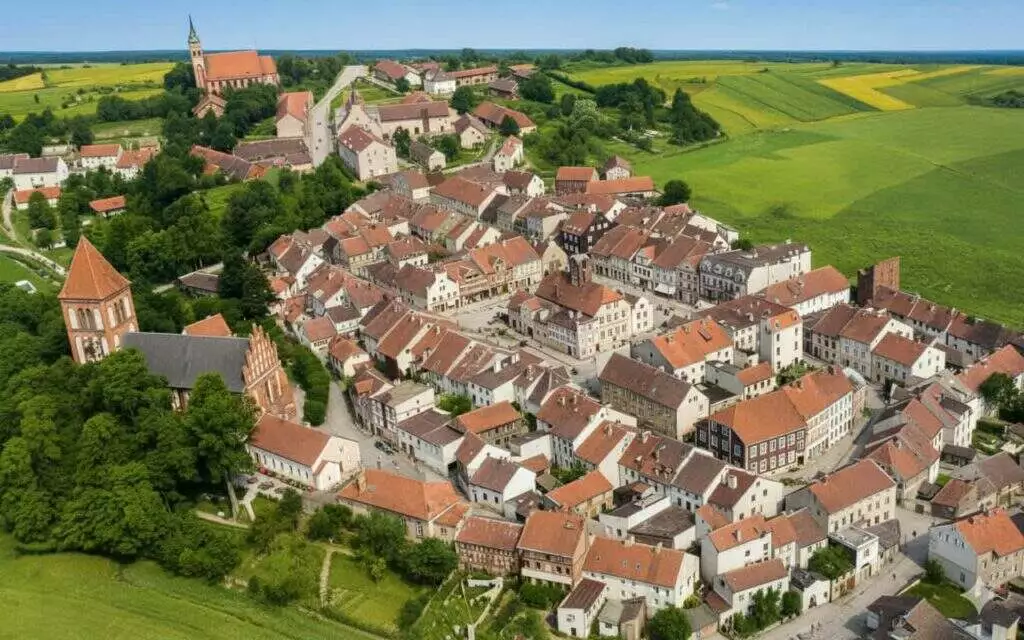
Górowo Iławieckie. Source: Wielki Wu.
That evening, I closed my computer, but I couldn’t stop thinking about it. I realized it wasn’t the photo of the town hall that moved me so much. There was a single flag missing. Not even the comments themselves. What hurt me most was that the place I’d spent years getting to know through the stories of specific people had suddenly been reduced to a simple division between “ours” and “outsiders,” as if all the stories I’d been fortunate enough to hear had ceased to have any meaning. Since that evening, I’ve often returned to one question: How is it that in a place whose history is the history of people forced to leave their homes, we find it so easy to say to another person:Go back where you came from.“
Sometimes I envy Wojtek. When he talks to people, he says with such naturalness, “I’m from Górowo.” There’s a certainty in those words that I don’t think I’ll ever possess. I’ve lived here for over ten years, we made our home here, we planted trees here that grow bigger every year, I learned to live slower and enjoy the ordinary here, and yet when someone asks me where I’m from, I answer without a second thought: “From Gdańsk.”
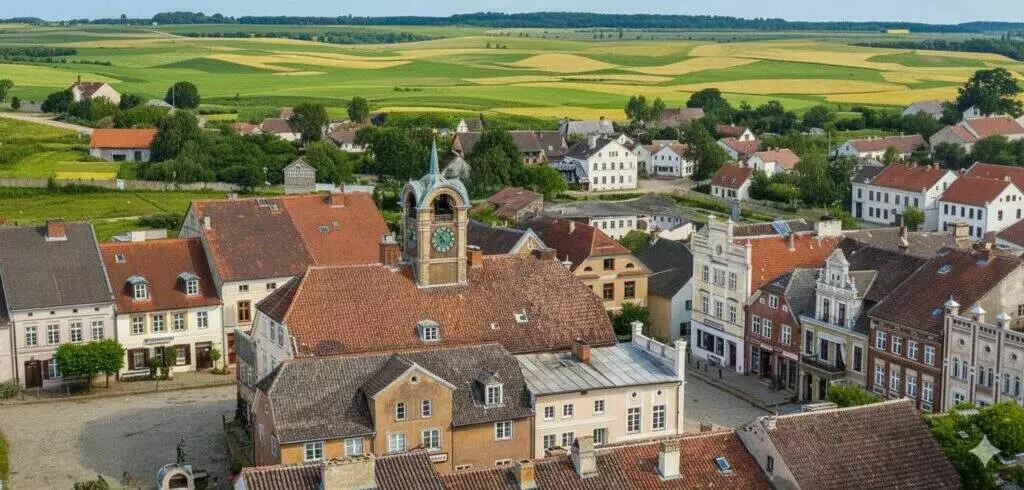
Górowo Iławieckie. Source: Wielki Wu.
Landscapes from childhood
And only now am I beginning to understand my mother. She was nineteen when she followed my father to Gdańsk. She lived there almost her entire adult life, worked there, raised her children, and made a home. Yet she never called herself from Gdańsk. Her roots were in Sierpc, and it was there that she most often recalled. For many years, this seemed strange to me. Today I know that a person can spend most of their life in one place and still carry within them the landscapes of their childhood.
Perhaps that’s why it was so difficult for me to read the comments under the photo of the town hall. Not because anyone had different views than me. Democracy, after all, is about being able to differ. Something much deeper hurt me. For the first time, I felt like we’d forgotten the true history of these lands. We’d forgotten that almost every family living here had a journey behind them. For some, it began in former East Prussia, for others in the Borderlands, for still others in the Bieszczady Mountains or central Poland. Some fled the war, others were displaced, still others came here because history left them no other choice. One thing united them – they all had to learn to live anew.
Today, when I think back to the women I met in Barka, to the indigenous women I spoke with years ago, to the Polish-Ukrainian couples, I increasingly come to the conclusion that they all told me the same story. Not the story of Germans, Ukrainians, Lemkos, or Poles. They told the story of people who simply wanted to live, raise children, work, feel at home, and have a place to call home.
Perhaps that’s why I can’t look at the photo of Górowo Town Hall solely through the prism of the missing flag. For me, what happened beneath it became far more important than this single photo. Not because I’d read over two hundred comments. The internet is full of similar discussions. Something else hurt me. It hurt me that in a place whose history could teach us humility in the face of human fate, we’d so easily begun to pass judgment on people simply because of their surname, religion, or family roots.
I don’t know if I’ll ever learn to say, “I’m from here.” Perhaps I’ll always say I’m from Gdańsk. But I do know one thing. Over the past ten years, living here has taught me something I wouldn’t find in any history book. It has taught me that before judging a person, it’s worth knowing their story first. Because very often, behind one name lies a story of a lost home, behind another of a forced departure, and behind yet another of an attempt to start over.
What do you think about this story?
Join the conversation. Please keep comments relevant to the article.
Write a comment