
Russia’s armed aggression against Ukraine began in 2014, but its political and historical roots reach much further back. From the very first years of Ukrainian independence, Moscow took steps aimed at keeping Ukraine within its sphere of influence. Disputes over the Black Sea Fleet, the crisis around Tuzla Island, gas pressure, and support for pro-Russian circles formed the backdrop to events that led to the annexation of Crimea and the outbreak of war.
The Black Sea Fleet – a tool of Russian influence


After Ukraine declared independence in 1991, one of the most important problems in relations with Russia became the future of the Black Sea Fleet. Its main base was located in Sevastopol, and along with it, an extensive military infrastructure, numerous ships, airplanes, and helicopters remained on the territory of the new state. In accordance with the principle of territorial sovereignty, the Ukrainian authorities recognized that military formations stationed on their territory should be subordinate to the Ukrainian state.
Moskwa nie zamierzała jednak łatwo pogodzić się z utratą kontroli nad tak ważnym strategicznie obszarem. Flota Czarnomorska stała się nie tylko instrumentem wojskowym, lecz także narzędziem politycznego oddziaływania na Krymie. Utrzymywane przez nią instytucje i struktury sprzyjały szerzeniu rosyjskich wpływów, a obecność rosyjskich marynarzy oraz powiązania z lokalnymi środowiskami miały ułatwiać w przyszłości wspieranie organizacji i ruchów separatystycznych.
W kwietniu 1992 roku prezydenci Ukrainy i Rosji wydali sprzeczne decyzje dotyczące podporządkowania floty. Kijów chciał objąć ją kontrolą własnego Ministerstwa Obrony, podczas gdy Moskwa nie zamierzała rezygnować ze swoich roszczeń. Rosja oskarżała Ukrainę o próbę przejęcia floty, jednocześnie wydając rosyjskie paszporty pracownikom jej struktur i prowadząc na Krymie antyukraińską kampanię informacyjną. W kolejnych miesiącach doszło do kilku niebezpiecznych incydentów.
We wrześniu 1993 roku starcie ukraińskiej piechoty z rosyjską strażą przybrzeżną zakończyło się ranieniem trzech Rosjan. Kolejny poważny incydent nastąpił w kwietniu 1994 roku, kiedy rosyjski statek hydrograficzny „Czeleken” próbował wywieźć z Odessy sprzęt radionawigacyjny. Gdy ukraińskie jednostki graniczne ruszyły za nim, do akcji włączyły się samoloty szturmowe Su-25, a z Sewastopola wyszła morska grupa uderzeniowa rosyjskiej floty. Do otwartej konfrontacji ostatecznie nie doszło, a Rosjanie zdążyli przenieść sporny sprzęt na inne jednostki.
W czerwcu 1994 roku oba państwa uzgodniły podział Floty Czarnomorskiej. Rok później ustalono, że 18,3 proc. okrętów przypadnie Ukrainie, a 81,7 proc. Rosji. Moskwa otrzymała możliwość dalszego utrzymywania na ukraińskim terytorium setek jednostek oraz znacznego kontyngentu wojskowego. W maju 1997 roku podpisano porozumienie regulujące status i warunki stacjonowania rosyjskiej floty w Sewastopolu.
W tym samym okresie Ukraina i Rosja zawarły traktat o przyjaźni, współpracy i partnerstwie. Dokument zobowiązywał obie strony do poszanowania integralności terytorialnej, istniejących granic oraz powstrzymania się od działań zagrażających bezpieczeństwu drugiego państwa. Na papierze relacje miały opierać się na wzajemnym szacunku.
Memorandum budapeszteńskie i złudzenie bezpieczeństwa
5 grudnia 1994 roku Ukraina podpisała Memorandum budapeszteńskie, w związku z przystąpieniem do Układu o nierozprzestrzenianiu broni jądrowej (NPT) jako państwo nieposiadające broni nuklearnej. Rosja, Stany Zjednoczone i Wielka Brytania potwierdziły w nim zobowiązanie do poszanowania niepodległości, suwerenności i istniejących granic Ukrainy oraz do powstrzymania się od użycia siły lub groźby jej użycia. Dokument zawierał zapewnienia bezpieczeństwa, ale nie ustanawiał automatycznego obowiązku udzielenia Ukrainie pomocy wojskowej w razie agresji.
Wydawało się wówczas, że bezpieczeństwo Ukrainy zostało zabezpieczone międzynarodowymi deklaracjami. Nic bardziej mylnego. Kolejne wydarzenia pokazały, jak ograniczona była skuteczność tych gwarancji, gdy jedno z państw, które je podpisało, samo zdecydowało się naruszyć ukraińską suwerenność.
Tuzła – ostrzeżenie, którego nie można było zignorować
Jesienią 2003 roku doszło do jednego z najpoważniejszych kryzysów rosyjsko-ukraińskich od czasu rozpadu Związku Radzieckiego. 29 września Rosja rozpoczęła budowę grobli łączącej należący do niej Półwysep Tamański z ukraińską wyspą Tuzła. Oficjalnie Moskwa tłumaczyła przedsięwzięcie potrzebą umocnienia brzegu. Kijów uznał jednak, że rzeczywistym celem może być zmiana przebiegu granicy i podważenie ukraińskiej kontroli nad częścią Cieśniny Kerczeńskiej.
Tuzla was a small island, inhabited by about thirty families mainly engaged in fishing. However, its strategic importance turned out to be disproportionately large. Russia began to question Ukraine’s ownership of the island, claiming that it was merely a spit rather than a separate territory. At the same time, Russian warships appeared in the region, and military exercises were conducted on the Taman Peninsula. This was accompanied by a propaganda campaign intended to justify Russia’s claims.
Ukraine responded with a protest note, reinforced the border post on the island, and dispatched its own naval units to the conflict area. Military exercises were also launched in Crimea. President Leonid Kuchma cut short his visit to Latin America and returned to the country to deal with the crisis. On 23 October 2003, the President of Ukraine visited Tuzla Island. During a meeting with journalists, he informed them that the day before he had had a telephone conversation with Vladimir Putin. As he reported, the two presidents agreed to end the conflict. Further negotiations were to be conducted by representatives of both governments, and talks between the prime ministers were scheduled for 24 October.
The crisis over Tuzla showed that Moscow was ready to use military pressure, territorial disputes, and propaganda to test the reactions of Ukraine and the international community. For many analysts, these events became one of the warning signals that Russia’s ambitions toward Ukraine did not end with maintaining military bases. The scale of these ambitions was also revealed by statements from many Russian politicians about Russia’s interests extending not only to Tuzla, but also to Crimea, Kherson, Mykolaiv, and Odesa. These statements exposed a way of thinking in which the formal sovereignty of a neighboring state did not, for Moscow, mean its genuine independence.
The struggle over Ukraine’s direction
In 2006, pro-Russian circles organized protests in Crimea against the international Sea Breeze exercises involving, among others, American soldiers. In Feodosia, the port was blockaded and the presence of U.S. personnel was opposed. Ultimately, the exercises did not take place on the planned date because the Ukrainian parliament did not consent to the participation of foreign troops.
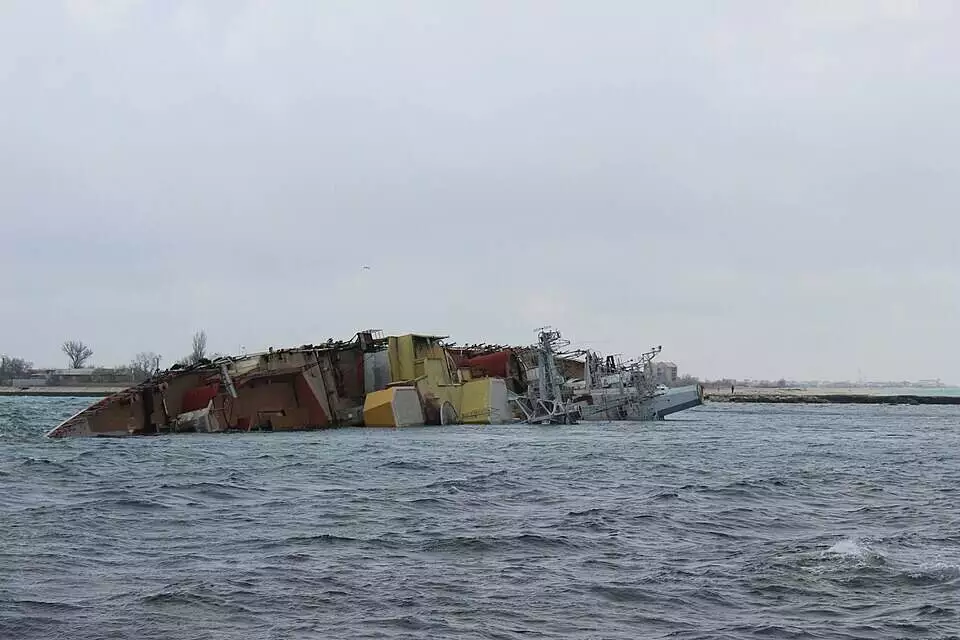
In May 2008, pro-Russian deputies in Sevastopol blocked the installation of a plaque commemorating the 90th anniversary of the raising of Ukrainian flags on Black Sea Fleet ships. Two months later, on July 5, during another attempt to install it, pro-Russian activists attacked Ukrainian sailors, tore down the plaque, and sank it in Sevastopol Bay.
Particularly dangerous, however, proved to be the extension of the Russian fleet’s presence in Crimea. In April 2010, Presidents Viktor Yanukovych and Dmitry Medvedev signed an agreement in Kharkiv under which the Russian Black Sea Fleet was to remain on the peninsula for 25 years longer, until 2042. In return, Ukraine was to receive a discount on Russian gas.
The agreement was signed on April 21, 2010. The very next day, its full text was published by Ukrainska Pravda; however, the document had not previously been presented for transparent public debate prior to signing. On April 27, the Verkhovna Rada of Ukraine ratified the agreement amid violent protests.
Opponents of the agreement warned that extending the stationing of Russian troops weakens Ukraine’s sovereignty and threatens its strategic interests. Without this agreement, the Russian fleet would have had to begin withdrawing from Crimea once the existing срок expired. The Kharkiv accords postponed that moment by another quarter of a century.
The promised energy benefits turned out to be far less favorable than suggested. Gas prices rose, and Prime Minister Mykola Azarov admitted two years later that the agreement in fact did not bring Ukraine the expected discounts. In exchange for uncertain economic benefits, Kyiv agreed to maintain the Russian military presence in a location of key importance for the country’s security. Gas became an instrument for influencing the decisions of the Ukrainian authorities. In this way, Russia showed that it can use economic dependencies to achieve political goals.
Crimea: from years of pressure to open aggression
The chronology of events in Crimea requires distinguishing several stages. The beginning of the Russian operation to seize the peninsula and the armed aggression against Ukraine is considered to be 20 February 2014. Importantly, this occurred even before Viktor Yanukovych fled Kyiv on 21 February, and before the decision of the Ukrainian parliament to remove him from performing the duties of president, taken on 22 February. Ministry of Foreign Affairs of Ukraine+1
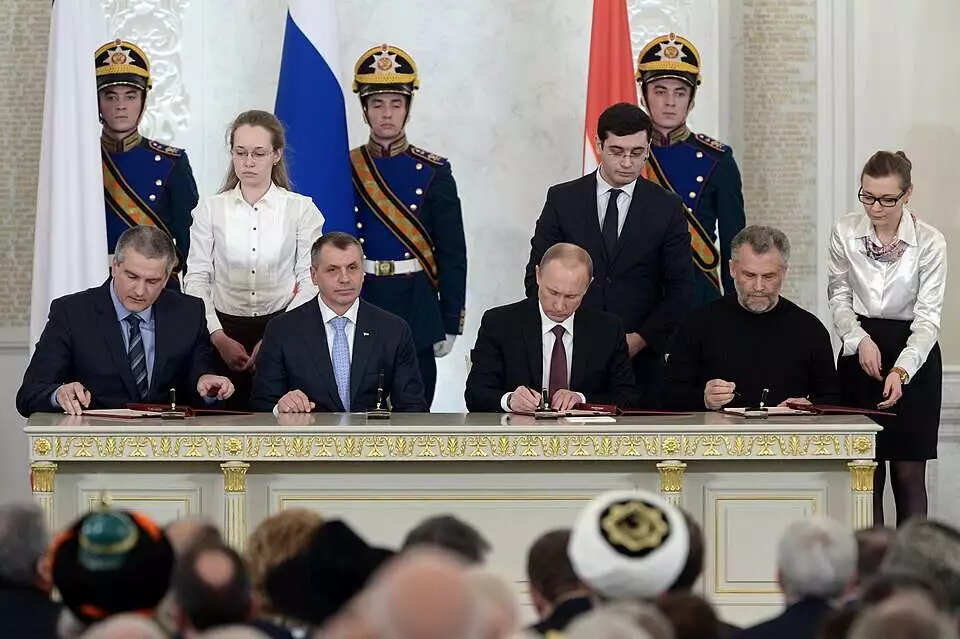
The next stage was the takeover, on 27 February, of the buildings of the parliament and government of the Autonomous Republic of Crimea by Russian soldiers without insignia. On 16 March, a referendum not recognized by Ukraine and the international community was held, and on 18 March 2014, a document on incorporating Crimea into the Russian Federation was signed in Moscow. It was this last act that constituted the formal stage of the peninsula’s annexation. The United Nations in Ukraine+2
In this way, the beginning of the Russian military operation and occupation should be separated from the later formal announcement of annexation. These were not events of the same date, but successive stages of Russia’s actions against Ukraine’s territorial integrity.
A history that must not be forgotten
Russia’s annexation of Crimea in 2014 was the culmination of a long-running process in which Moscow used its military presence, economic pressure, local divisions, and propaganda to curtail Ukraine’s sovereignty. Disputes over the Black Sea Fleet, the crisis around Tuzla, gas conflicts, and the Kharkiv agreements created a context without which it is difficult to understand later events.
In the autumn of 2014, the Ukrainian prosecutor’s office accused Viktor Yanukovych of abuse of power and treason, pointing, among other things, to the creation of conditions conducive to increasing Russia’s military presence in Crimea and Sevastopol.
This does not mean that every earlier crisis was part of a single, pre-planned сценаріо. It does, however, show a recurring mechanism: for years Russia weakened Ukraine’s independence before resorting to open aggression. The seizure of Crimea and the armed actions in Donbas in 2014, followed by the full-scale invasion in 2022, were subsequent stages of a conflict whose roots reach back to the first years of Ukrainian independence.
Sources: State Bureau of Investigation of Ukraine – the Kharkiv agreements case; State Bureau of Investigation of Ukraine – investigation concerning Yanukovych and Azarov; Radio Svoboda (2012); Krym.Realii; Radio Svoboda – archive I; Radio Svoboda – archive II; Radio Svoboda – archive III; Encyclopedia of the History of Ukraine; President of Ukraine – Decree No. 477/2006; Ukrainska Pravda (04.08.2006); Ukrainska Pravda (07.08.2006); Vijsko.org – division of the Black Sea Fleet; Suspilne Krym – the history of Crimea in the 1990s; Istorychna Pravda (10.05.2011); Institute of the History of Ukraine – timeline.

Journalist, columnist, author of books about Ukraine, tour guide, and commentator on developments in Ukraine and Polish-Ukrainian relations.
A certified guide to Odesa, the Odesa catacombs, Ukrainian Bessarabia, and Kyiv. He is the author of numerous publications on Ukraine’s history, culture, and contemporary affairs, some of which have been translated into Ukrainian and published in Ukraine. In 2020, he received the honorary title of Ambassador of Odesa in Poland from the Mayor of Odesa.
On 24 February 2022, the day Russia launched its full-scale invasion of Ukraine, he was in Odesa. He remained there for several months, helping coordinate humanitarian aid and reporting on the war for Polish media outlets. He described his experiences during this period in his book Odessa 4.5.0.
At Nowiny Wschodnie, he publishes articles and commentary on the Russo-Ukrainian war, Russian propaganda and disinformation, Ukrainian history, particularly that of Odesa, as well as Polish-Ukrainian relations and changing public attitudes.
He collaborates with Ukrainian newsrooms and online news outlets and appears in Polish media as a commentator on Ukrainian affairs.
What do you think about this story?
Join the conversation. Please keep comments relevant to the article.
Write a comment