

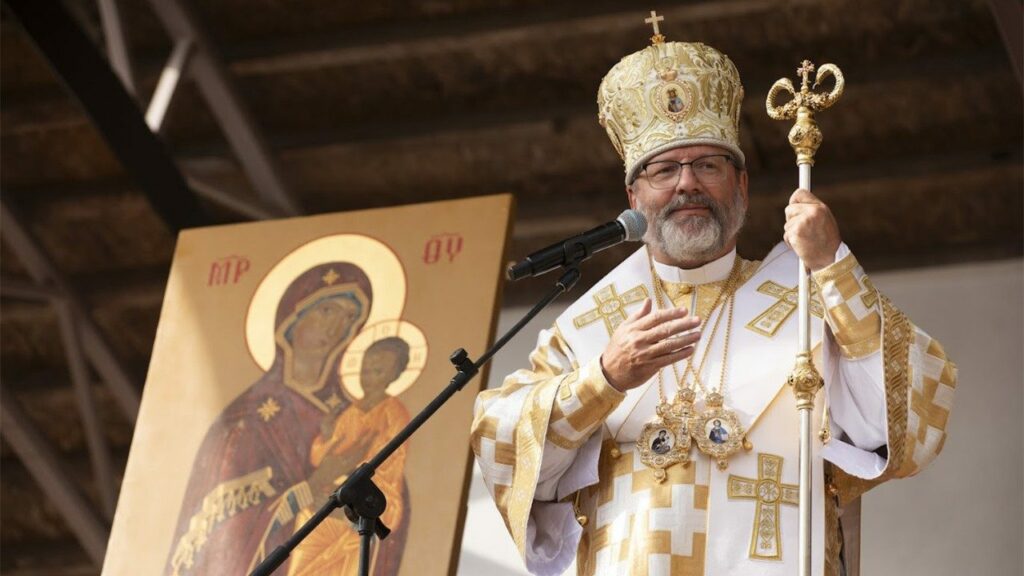
The head of the Ukrainian Greek Catholic Church, Archbishop Sviatoslav Shevchuk, addressed a letter to the chairman of the Polish Bishops’ Conference, Archbishop Tadeusz Wojda SAC. In it, the Ukrainian bishops thank the Catholic Church and the Polish nation for the help provided to Ukraine and to refugees. At the same time, they appeal that, amid growing tensions in Polish-Ukrainian relations, we must not allow mutual accusations and distrust to destroy the achievements of reconciliation built over the past decades.
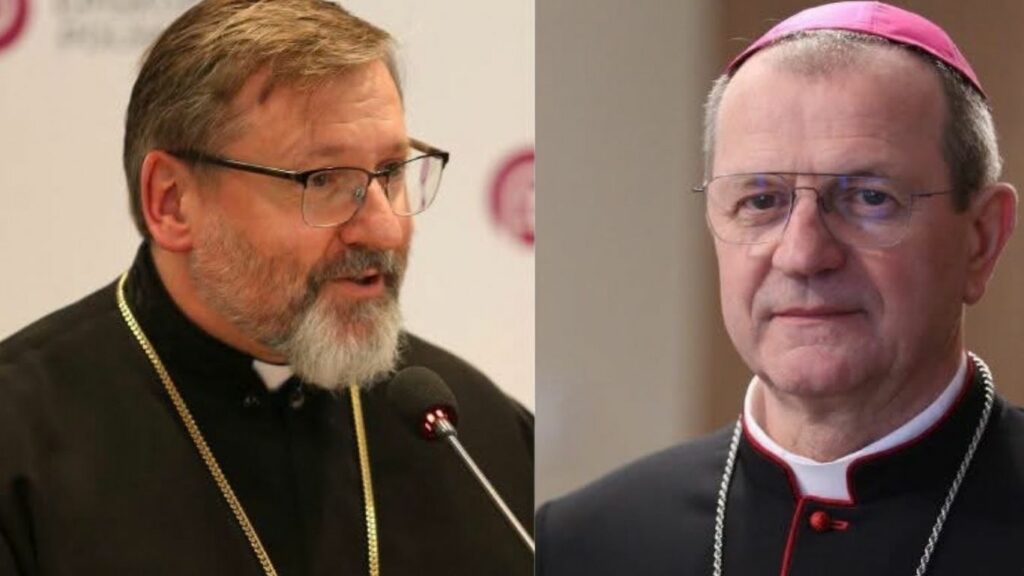


The letter was adopted by the bishops of the Ukrainian Greek Catholic Church during the Synod held on 1–10 July 2026 at the Marian Shrine in Zarvanytsia, Ukraine. The Polish Bishops’ Conference informed about the document on 22 September.
Thanks to Poles for helping Ukraine
One of the most important elements of the letter is the expression of thanks addressed directly to the Polish Church and society.
The Ukrainian hierarchs recall the help Poland has been providing to Ukraine since the start of the full-scale Russian invasion, drawing particular attention to support for people forced by the war to leave their homes.
“We would like to express our special thanks to the Catholic Church and the Polish nation for prayerful support, understanding, and generosity during this time of ongoing crisis”.
The bishops noted that they are expressing their gratitude also on behalf of people displaced by the war who found refuge in Poland.
Separate thanks were addressed to the Polish Bishops’ Conference for its appeal to Poles to support Ukrainians at a time when Russian attacks were systematically striking Ukraine’s energy infrastructure.
Not only the war. The bishops address Polish-Ukrainian relations
However, the letter is not limited to thanks for humanitarian aid and solidarity with Ukraine.
Ukrainian hierarchs also refer to the deteriorating atmosphere in relations between parts of Polish and Ukrainian society. They do not point to specific political or historical disputes, but they write plainly about the “voices of mutual accusations and distrust” that have emerged in recent months.
Ukrainian bishops thank Poles
Their response is to be the continuation of the reconciliation process.
“As shepherds, we must oppose the voices of mutual accusations and distrust that have appeared in recent months”.
The bishops add that at the same time they want to demonstrate their “fraternal commitment” to further building on the legacy of reconciliation.
This is an important fragment of the document, as it appears at a time when issues of historical memory and the assessment of tragic events in Polish-Ukrainian relations remain present in the public debate of both countries. The letter itself does not settle these disputes—its authors focus on the need for dialogue and preventing a rupture in relations.
John Paul II as a point of reference
The figure of John Paul II returns repeatedly in the document.
Directly before this year’s Synod, the Ukrainian Greek Catholic Church commemorated the 25th anniversary of the historic pilgrimage of the Polish pope to Ukraine.
For the Ukrainian bishops, John Paul II remains one of the symbols of Polish-Ukrainian reconciliation.
The hierarchs recalled his appeal that both nations should not remain prisoners of a painful history, but should be able—in a Christian spirit—to move toward forgiveness.
The reference to John Paul II is not accidental. As early as the end of June, representatives of the Church from Poland and Ukraine published a joint statement regarding the relations between the two nations. It was signed by Cardinals Mykola Bychok, Konrad Krajewski, Kazimierz Nycz and Grzegorz Ryś, as well as Abp. Sviatoslav Shevchuk.
In the document, they emphasized:
“Too much binds our Nations for us to allow the squandering of our common heritage”.
The signatories declared at the time that the path of Polish-Ukrainian reconciliation, begun with the blessing of John Paul II, should be patiently continued.
The Synod brought together bishops from around the world
The letter to the chairman of the Polish Episcopate is all the more significant because it was adopted not at a local meeting, but at the Synod of Bishops of the Ukrainian Greek Catholic Church.
The proceedings in Zarwanica were attended by 49 UGCC hierarchs from Ukraine, Western and Central Europe, North and South America, and Australia. Among them were 34 diocesan bishops, nine auxiliary bishops, and five retired bishops.
The Synod is the highest governing body of the Ukrainian Greek Catholic Church. It makes the most important decisions concerning the functioning of the Church both in Ukraine and in Ukrainian communities outside the country’s borders.
This year’s sessions took place under the conditions of the ongoing war. In the adopted resolutions, the bishops referred, among other things, to the Church’s social activity and thanked those involved in helping people suffering as a result of the war.
Churches want to protect the achievements of reconciliation
Archbishop Shevchuk’s letter therefore fits into a broader series of actions by representatives of the Churches in Poland and Ukraine who are trying to maintain dialogue even when difficult historical topics and mutual grievances return in the public sphere.
The message of the Ukrainian bishops contains two parallel elements: gratitude for Polish help during the war and a call to protect Polish-Ukrainian reconciliation from growing distrust.
This does not mean a call to abandon talking about history. In the previously published joint statement by Polish and Ukrainian hierarchs, the emphasis was placed on continuing the common path while rejecting the logic of imposing one’s own vision of the past on the other side.
Now the bishops of the Ukrainian Greek Catholic Church once again refer to the legacy of John Paul II and argue that even in a period of tensions, dialogue between Poles and Ukrainians should be continued.
Their message can be reduced to two words that run throughout the entire document: gratitude and reconciliation.
