

She has nowhere to return to. Her hometown of Melitopol was occupied, and their house was taken over by Russian soldiers. Later, the building was flooded, and today Lyudmila doesn’t even know what’s left of it. When they fled Ukraine, rockets flew over their car. Today, Lyudmila says that the war has remained in the bodies and minds of many Ukrainian women trying to build a life in Poland. Although many of them are going through very difficult times, Lyudmila emphasizes that if you seek help and knock on doors, you can always find a way out. In the interview, she talks about how she survived the first days of the war, what she had to face after arriving in Poland, and how she tried to cope with the trauma, stress, and loneliness.
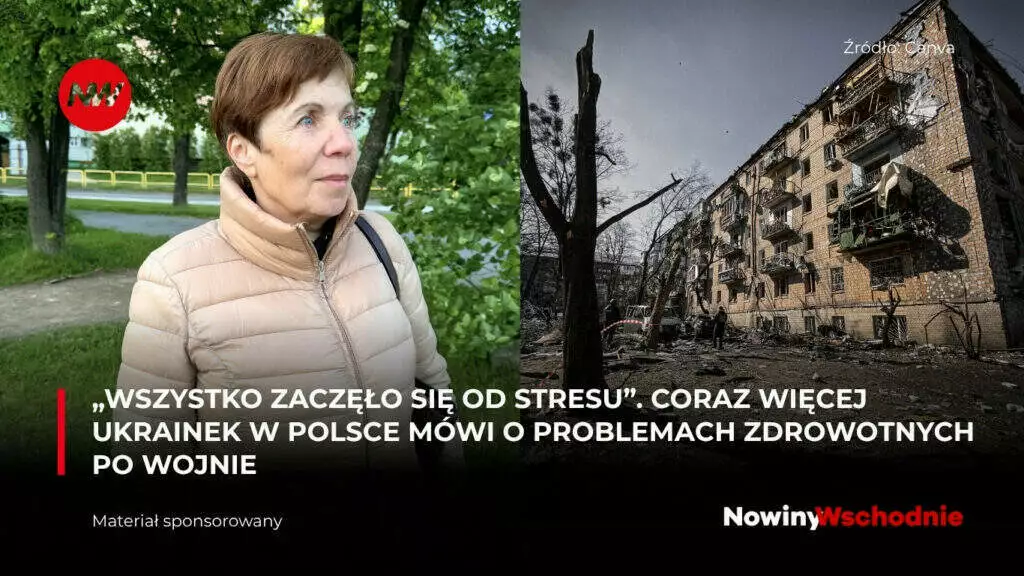


When on February 24, 2022, Lyudmila, together with her daughter, granddaughter and grandson, left the now occupied Melitopol, she did not imagine that she would not return to her family home for many years to come.
– We thought it would last two weeks. That the war would soon be over and we would go home. – he recalls today.
As they fled, rockets flew over their car. They drove at night, on back roads, without lights. Bridges were down, roads were blocked, and lines of cars filled with families fleeing the war stretched all around them.
“There was a lot of stress. We were traveling with small children. My granddaughter was six years old at the time, and my grandson was sixteen. It’s hard for me to think back on it now. That war still haunts us and lives on in our hearts with pain and memories. I also saw how much my grandson was going through. During the escape and the entire journey, he was under such intense stress that he had to take sedatives.” – he says.
The family only reached Poland on March 4th. Along the way, they were helped by volunteers from western Ukraine, and later by Poles waiting at the border with water, food, hygiene products, and assistance for the children.
– We arrived with practically one bag. The Poles welcomed us very warmly. We were given food, clothing, assistance, and transportation. I’ll never forget it. – says Ludmila.
War doesn’t end when you cross the border
Although more than four years have passed since she left Ukraine, Lyudmila admits that stress and uncertainty are still part of the everyday lives of many refugees.
Her family home is now in the occupied territories.
“Russian soldiers lived in our house. They took the keys. Then the plumbing burst and the house flooded. We don’t even know what’s left there today.” – he says.
After arriving in Poland, the family first settled near Wrocław. Initially, they hoped the situation would quickly calm down and they would be able to return to normal life.
“We truly believed we’d be back in a few weeks. Nobody thought the war would last so long.” – says.
The first few months in Poland were very difficult. Being in a foreign country, uncertainty, stress, and constantly following news from Ukraine became a daily reality.
“You lived in constant tension. Every phone call from Ukraine was terrifying. You were afraid for your family, your friends, your home.” – he recalls.
Lyudmila helped at the volunteer center, translated between Poles and refugees, and supported other Ukrainians who were just arriving in the country.
“The Poles helped us enormously back then. But we also tried to help others. Many people arrived completely lost, without knowing the language, without a plan, without anything.” – says.
As he emphasizes, learning the Polish language and contact with people also played a huge role.
“When you start learning a language, you start to think a little differently. It’s easier to navigate a new reality and less fearful.”
The hardest thing was loneliness
Today, Lyudmila lives with her daughter and granddaughter. She takes care of the house and helps support her family. Like many older Ukrainian women, however, she admits that after the war, loneliness is often her biggest problem.
“Younger people work and have their own lives. Older women are often left alone. People start to withdraw into themselves, and that has a profound effect on their psyche.” – he explains.
According to her, many women experience prolonged periods of constant stress after the war. They first try to save their children and family, then find their way in a new country, with their own health and well-being taking a back seat.
“Women often don’t think about themselves. First, there are children, home, family, documents, and work. Only later do you start to notice that your body can’t handle it all anymore.” – says.
Ludmila emphasizes that the meetings organized by the local foundation and the “Siła Kobiet” club were of great importance to her. She says that after experiencing war, flight, and living under constant stress, people desperately need another person and simple conversation.
“When you’re left alone with your problems, it’s very easy to withdraw into yourself. But when you meet other people who have been through similar things, it’s easier to deal with it all.” – says.
It is there that, together with other refugee women, they share their problems, talk about loneliness, stress and health problems, and together look for ways to deal with them.
“You suddenly see that you’re not the only one facing these problems. Other women also go through stress, health problems, and mental fatigue after war. This gives you a sense of support and helps you get through the tougher times more easily.” – emphasizes Ludmila.
“Stress stays in the body”
Ludmila admits that long-term stress and living in constant tension have also begun to affect her health.
– Everything comes to a head when faced with stress. The body simply begins to rebel. – says.
Experts emphasize that chronic stress, fatigue, and weakness can increase the risk of many health problems, including urinary tract infections, which are particularly common among women. According to medical data, up to 81% of urinary tract infections occur in women.
The most common symptoms include a burning sensation during urination, frequent urination, a feeling of pressure on the bladder, and lower abdominal discomfort. Experts emphasize the importance of reacting quickly at the first symptoms and supporting the body’s natural defense mechanisms.
In such situations, many people seek support at the first symptoms.
Ludmila admits that in her case, herbal preparations supporting the urinary system also proved helpful.
– It’s good that there are products that help. It’s worth talking about health and not ignoring the first symptoms. You should ask doctors or pharmacists and seek help. – says.
One of the preparations used as a support during the first symptoms of urinary tract infection is Urosept — a herbal medicine available without a prescription, used as an aid in urinary tract infections and urolithiasis.
Plant preparations of this type support the body’s natural defense mechanisms and help maintain the proper functioning of the urinary tract, especially during periods of weakness, fatigue and chronic stress.
Ludmiła also emphasizes that many women from across the eastern border, after arriving in Poland, are not yet familiar with Polish preparations and are often afraid to reach for products they have not used before.
“In Ukraine, women know different medications and different names. Here, they’re often afraid to ask or don’t know what they can use,” she says.
Meanwhile Urosept has been present on the Polish market since over 40 years and has remained one of the most recognizable preparations supporting the urinary tract for years. Pharmacists emphasize that at the first symptoms, it’s worth not being afraid to seek help—both from a doctor and a pharmacy, where you can obtain basic support and information about available preparations.
“You can’t close yourself off”
Despite difficult experiences, Ludmila still believes that she will return home one day.
“I hope the war ends and we’ll be back. Maybe not right away, but someday for sure.”
At the same time, she emphasizes that many Ukrainian women in Poland still need support — not only financial, but above all psychological and social.
“You can’t close yourself off. You have to find people, support, and talk. It’s very important.” – says.
In conclusion, he returns to one more topic – gratitude towards Poles.
“I want to thank the Poles for everything. For their help, for their kindness, and for welcoming us. I will never forget that.”
Sponsored material
UROSEPT®
coated tablets. Complex product
Indications for use: Urosept is a mild diuretic. It is used as an adjunct in urinary tract infections and urolithiasis.
Responsible entity: PZZ Herbapol SA, Towarowa Street 47/51, 61-896 Poznań
This is a medicine. For safety, use it according to the package leaflet and only when necessary. If in doubt, consult your doctor or pharmacist.

Journalist and Editor-in-Chief of Nowiny Wschodnie, a news platform followed by more than 140,000 people on social media. A graduate in Journalism and Social Communication, he has been co-creating and developing Nowiny Wschodnie since 2017. He gained professional experience working with local and international media.
He specializes in fact-checking, countering disinformation and propaganda, and information security. His work focuses on Poland, Ukraine, Eastern Europe, and Polish-Ukrainian relations. He is also the founder of a non-profit organization working in the fields of integration and intercultural dialogue.
What do you think about this story?
Join the conversation. Please keep comments relevant to the article.
Write a comment